Beyond the Reformer: How the Classical Pilates Apparatus Works Together
The reformer is one part of classical Pilates. See how the mat, tower, Cadillac, chair and barrels belong to the same method at True Pilates Method in Camden.
Scroll to explore
True Pilates Method
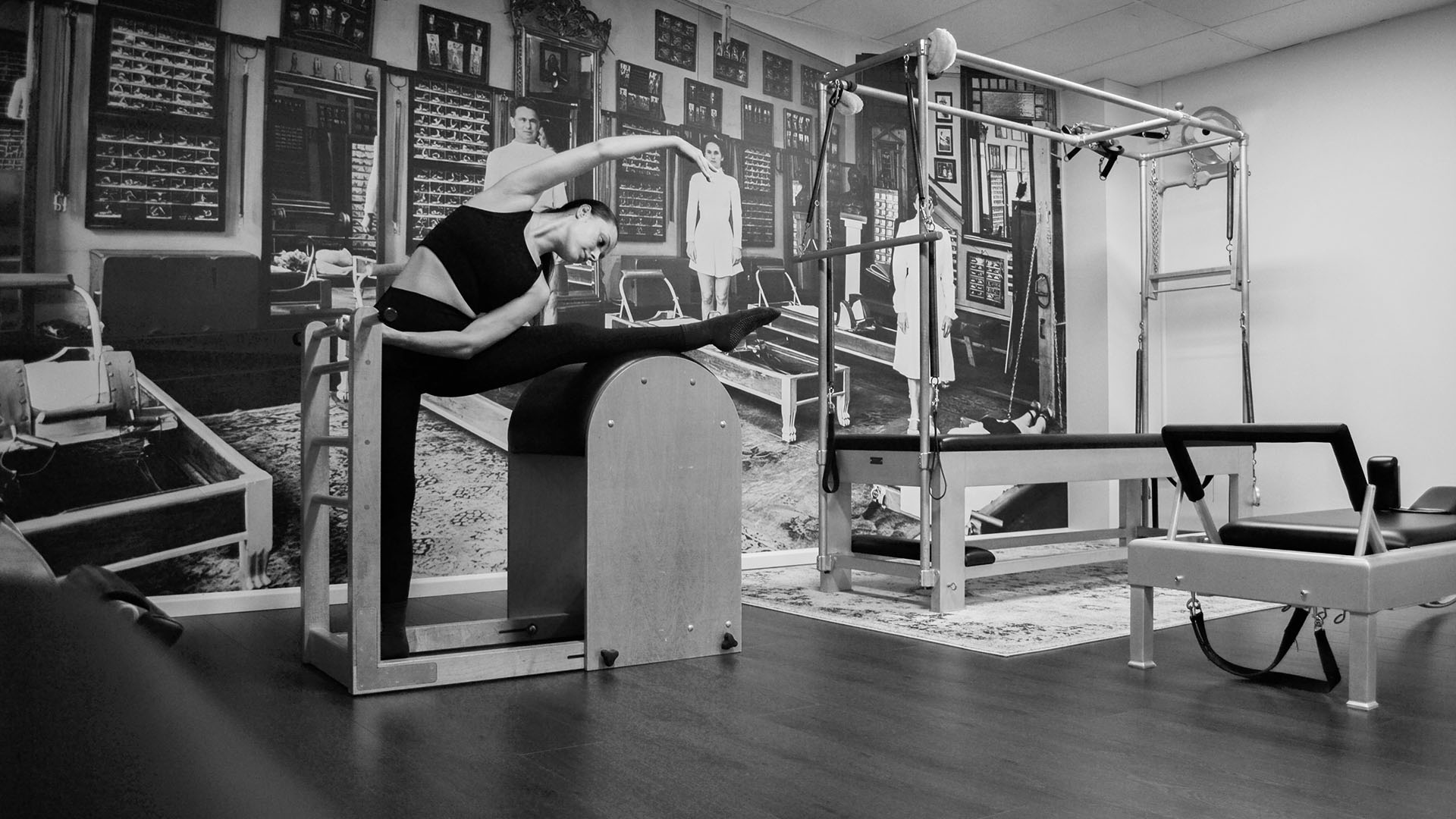
Classical Pilates uses a complete system of apparatus, not just a reformer. At True Pilates Method in Camden, the reformer sits alongside the mat, tower, Cadillac, chair and barrels. These are different ways to practise the same method, with your instructor guiding what is appropriate for you.
If you have only seen reformer classes, a full studio can look unfamiliar. You do not need to recognise every piece before you arrive. Understanding what each one contributes can help you picture the experience.
The reformer is a starting point, not the whole studio
A reformer has a moving carriage, springs, straps and a foot bar. It gives you a way to work with resistance while paying attention to how you move. In classical Pilates, that work connects with what you learn elsewhere in the studio rather than standing alone as a separate workout.
Our small group studio classes use the full classical apparatus. That does not mean every person uses every piece in every class. Your level and the work being taught matter more than ticking off equipment.
The mat brings the focus back to your own movement
Mat work asks you to organise your movement without a reformer carriage beneath you. Familiar ideas such as control, breathing and precision still apply. Moving between mat and apparatus helps make those ideas less abstract: you meet them in different positions and exercises.
There is no need to decide that you are a “mat person” or a “reformer person” before starting. Both belong to classical Pilates.
Towers, the Cadillac, chairs and barrels add other ways to learn
The tower and Cadillac provide bars and spring attachments in a different arrangement from the reformer. Chairs use a spring-loaded pedal. Barrels provide a curved surface for supported positions and movement. Each changes the setup, so a familiar instruction can feel different when you try it elsewhere.
You are not expected to choose springs or work out unfamiliar apparatus by yourself. The teaching is part of the session. At True Pilates Method, we use Gratz and Legacy apparatus, with small group studio classes capped at eight people.
Why the connections matter more than collecting exercises
A class is not simply a tour of interesting equipment. The point is to practise with attention and build understanding over time. Repeating an exercise can be useful: it gives you a chance to notice an instruction you missed before or move with a little more control.
You can view our class levels and timetable to see how the studio organises that progression. Principle, Intermediate and Advanced describe stages of practice, not a race to the most complicated exercise.
Do I need apparatus experience first?
No. If you are new to classical Pilates, tell us when you apply. Principle classes or private sessions can provide a starting point, with the team helping you choose what fits. Previous reformer experience is useful context, but it is not a reason to skip learning a new studio’s foundations.
True Pilates Method is at 4/31 Cawdor Rd, Camden. If a full classical studio sounds like the way you would like to practise, apply for your place. Our introductory pack is three classes for $75. The first step is an application, followed by help with registration and choosing classes.
